The Songs of Śrīla Bhaktivinoda Ṭhākura
Here you will find a comprehensive overview of Śrīla Bhaktivinoda Ṭhākura’s songs, their original publication history, and how they guide the practitioner on the path of bhakti.
Table of Contents
- Navigating the Journey: The Five Categories of Śrīla Bhaktivinoda Ṭhākura’s Songs
- Original Publication Timeline (Sajjana-toṣaṇī)
- Kalyāṇa-kalpataru
- Śaraṇāgati
- Gītāvalī
- Gītamālā
- Other Poetical Works of Śrīla Bhaktivinoda Ṭhākura
Navigating the Journey: The Five Categories of Śrīla Bhaktivinoda Ṭhākura’s Songs
To help navigate the vast ocean of Śrīla Bhaktivinoda Ṭhākura’s songs, I categorized his songs into five distinct stages or themes. As visualized in the illustration below, these five categories represent a sequential journey along a "Golden Bridge" leading the soul out of the material ocean and toward the ultimate spiritual destination.
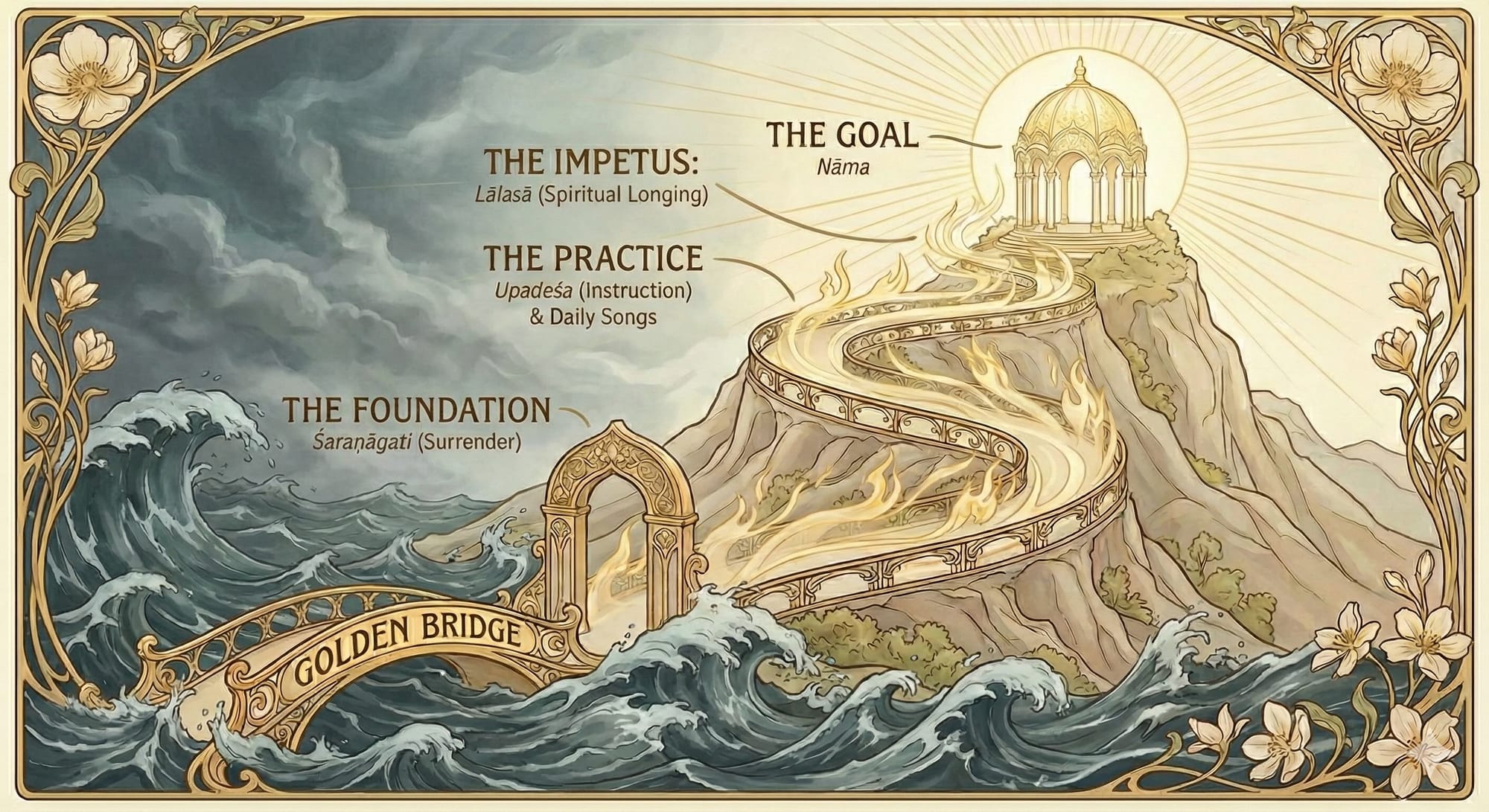
To help you navigate these categories in your own practice, I prepared a Song Selection guide featuring a one-sentence summary of each song organized by these five themes. We used this recently for the Bhaktivinoda-gīti-dhārā sessions in the Śrīla Bhaktivinoda Ṭhākura retreat in Godruma in February 2026. Find the links to download them below.
1. The Foundation: Śaraṇāgati (Surrender)
(Download Śaraṇāgati song selection sheet)
Before one can truly walk the path, the foundation must be set. The songs of Śaraṇāgati teach us how to completely yield our independence to the Lord, establishing the essential attitudes of humility, dedication, and absolute reliance on His protection.
2 & 3. The Practice: Upadeśa (Instruction) & Daily Songs
(Download Upadeśa song selection sheet & Daily Songs selection sheet)
With the foundation laid, the journey begins through active practice.
- Upadeśa: These are the songs of instruction, directly training the wandering mind (manaḥ-śikṣā), dispelling illusions, and grounding the practitioner in proper philosophical conclusions (siddhānta).
- Daily Songs: Alongside philosophical instruction are the practical daily kīrtanas—the morning awakening songs (Aruṇodaya-kīrtana), Āratis, and honoring of prasāda—which structure a devotee's daily life in remembrance of the Lord.
4. The Impetus: Lālasā (Spiritual Longing)
(Download Lālasā song selection sheet)
As practice matures, it awakens a deep, burning desire for perfection. The Lālasā songs—such as those found in Siddhi-lālasā or Bhajana-lālasā—express an intense, heartfelt yearning to achieve one's eternal spiritual form and serve the Divine Couple in the groves of Vṛndāvana. This longing is the driving force that propels the soul upward.
5. The Goal: Nāma (The Holy Name)
(Download Nāma song selection sheet)
At the pinnacle of the journey is the Holy Name itself. Śrī Nāma is both the supreme means and the ultimate goal. Here, chanting is no longer just a practice, but the pure, ecstatic expression of love of Godhead at the highest summit of spiritual realization.
Apart from this, there are other songs that highlight the goal, which you can download in this "other songs" selection sheet)
Original Publication Timeline in Sajjana-toṣaṇī
Before being compiled into the beloved songbooks we know today, many of Śrīla Bhaktivinoda Ṭhākura’s greatest compositions were originally serialized in his monthly spiritual journal, Sajjana-toṣaṇī. Here is a timeline of their initial appearances between 1892 and 1894:
Sajjana-toṣaṇī Part 4 (1892–1893)
- Issues 1–3: Śoka-śātana
- Issue 8: Aruṇodaya Kīrtana: Udilo Aruna (Bhairavī)
- Issue 9: Śaraṇāgati: (1) Śrī Kṛṣṇa Caitanya Prabhu, (2) Bhuliyā Tomāre, (3) Vidyāra Vilāse, (4) Jauvane Jakhana, (5) Āmāre Jīvana, (6) (Prabhu He) Śuno More Duḥkhera, (7) Prabhu He! Tuwā Pade E Minati Mora, (8) Emana Durmati
- Issue 10: Dvītīyata Ātma-nivedana: (9) Nā Karalu Karama, (10) Prāṇeśvara Kahabu Sarama Ki Bāta
- Issue 11: (11) Mānasa Deha Geha, (12) Ahaṁ Mama Śabda Arthe
- Issue 12 (March 1893): Nagara Kīrtana: Hare Kṛṣṇa Hare | Nitāi Ki Nāma Eneneche Re. Dhāma Parikramār Vaiṣṇava Sakala Āsile Tad-uddeśe Gīta: Hari Bole Modera Gaura Elo
Sajjana-toṣaṇī Part 5 (1893–1894)
- Issue 1: (13) Āmāra Bolite Prabhu, (14) Vastutaḥ Sakali Tava
- Issue 2: (15) Nivedana Kari Prabhu, (16) Ātma-nivedana, (17) Ki Jāni Ki Bale, (18) Dārā Putra Nija-deha, (19) Sarvasva Tomāra
- Issue 3: (20) Tumi Sarveśvareśvara, Caturthata Tumi Āmāke Avaśya Rakṣā Karibe Baliyā Dṛḓha Viśvāsa: (21) Ekhana Bujhinu Prabhu, (22) Tumi To Māribe Jāre
- Issue 4: (23) Ātma-samarpaṇe Gelā Abhimāna
- Issue 5: (24) Choḓato Puruṣa Abhimāna
- Issue 6: (25) Keśava Tuwā Jagata Vicitra
- Issue 10: (26) Tuwā Bhakti Pratikūla, (27) Viṣaya Vimūḓha Āra Māyāvādī Jana
- Issue 11: (28) Āmi To Anaṅga Raṅgada Vāsī, Ṣaṣṭhataḥ Ānukūlya Saṅkalpa: (29) Tuwā Bhakti Anukūla, (30) Godruma-dhāme Bhajana Anukūle
- Issue 12: (31) Śuddha-bhakata, (32) Rādhā-kuṇḍa-taṭa, Śrī Navadvīpa Śataka in Bengali verse
Later Volumes (Years 19 & 20)
- Year 19, Issue 1: Kabe habe bolo
- Year 19, Issue 3: Bāul-saṅgīta
- Year 19, Issue 10: Bhajana-lālasā
- Year 19, Issue 11: Śānta Dāsya Bhakti-sādhana Lālasā (Yāmuna-bhāvāvali Saṅgraha)
- Year 19, Issue 12: Śrī Navadvīpa Pañjikā Śrī Caitanyābda 431
- Year 20, Issues 1, 2 & 3: Śrī Rūpānuga Bhajana-darpaṇa
- Year 20, Issues 3 & 6: Śrīla Narottama Ṭhākura Mahāśayer Prārthanā-rasa-vivṛti: Hari Hari Ki Mora Karama-gati Manda (with commentary)
- Year 20, Issue 8: Siddhi-lālasā
Kalyāṇa-kalpataru
(Sixty-two songs, published 1880)
In the introductory song to Kalyāṇa-kalpataru (verses 5–7), Śrīla Bhaktivinoda Ṭhākura describes the structure of the book as follows:
“In Vaikuṇṭha, within the forest of ultimate welfare (niḥśreyasa), this kalyāṇa-kalpataru (desire tree of auspiciousness) eternally shines. This tree has three main branches, which increase the bliss of the wise: Upadeśa (instruction), Upalabdhi (realization), and Ucchvāsa (overflowing with emotion). By taking shelter of this wish-fulfilling tree, one attains the fruit of kalyāṇa (auspiciousness), which is eternal service in the pastimes of Śrī Śrī Rādhā-Kṛṣṇa in the transcendental forest of Vṛndāvana, the inner sanctum of Vaikuṇṭha."
For the full introduction, songs, and preface written by Śrīla Bhaktivinoda Ṭhākura, see: gaudiyakirtan.com/kalyana-kalpataru
- Maṅgalācaraṇa 1: vande vṛndāṭavī-candraṁ (8 verses)
- Maṅgalācaraṇa 2: jaya jaya śrī-caitanya patita-pāvana (22 verses)
Upadeśa—Instruction
- Upadeśa Maṅgalācaraṇa: dīkṣā-guru kṛpā kari’ mantra-upadeśa (3 verses)
- Mana Re, Keno Miche Bhajicho Asāra?
- Mana, Tumi Bhālobāsa Kāmera Taraṅga
- Mana Re, Tumi Baḓo Sandigdha-antara
- Mana, Tumi Baḓo·i Pāmara
- Mana, Tava Keno E Saṁśaya?
- Mana, Tumi Paḓile Ki Chāra?
- Mana, Yogī Ha’te Tomāra Vāsanā
- Ohe Bhāi, Mana Keno Brahma Ha’te Cāya
- Mana Re, Keno Āra Varṇa-abhimāna
- Mana Re, Keno Karo Vidyāra Gaurava
- Rūpera Gaurava Keno Bhāi?
- Mana Re, Dhana-mada Nitānta Asāra
- Mana, Tumi Sannyāsī Sājite Keno Cāo?
- Mana, Tumi Tīrthe Sadā Rata
- Dekho Mana, Vrate Ĵeno Nā Hao Ācchanna
The following four songs were added in the second edition published in 1900:
16. Mana, Tumi Baḓo·i Cañcala
17. Mana, Tore Boli E Vāratā
18. Ki Āra Bolibo Tore Mana
19. Keno Mana, Kāmere Nācāo Prema-prāya?
Upalabdhi—Realization
Realization Arising from Sincere Remorse (anutāpa-lakṣaṇa-upalabdhi)
- Āmi Ati Pāmara Durjana
- Sādhu-Saṅga Nā Ha·ilo Hāya!
- Ore Mana, Karmera Kuhare Gelo Kāla
- Ore Mana, Ki Vipada Ha·ilo Āmāra
- Ore Mana, Kleśa-Tāpa Dekhi Ĵe Aśeṣa!
Realization Arising from Disenchantment (nirveda-lakṣaṇa-upalabdhi)
- Ore Mana, Bhālo Nāhi Lāge E Saṁsāra
- Ore Mana, Bāḓibāra Āśā Keno Karo’?
- Ore Mana, Bhukti-mukti-spṛhā Karo’ Dūra
- Durlabha Mānava-Janma
- Śarīrera Sukhe, Mana, Deha Jalāñjali
Realization Arising from Transcendental Knowledge (vijñāna-lakṣaṇa-upalabdhi)
- Ore Mana, Boli, Śuno Tattva-vivaraṇa
- Apūrva Vaiṣṇava-tattva!
- Cij-jaḓera Dvaita Ĵini Karena Sthāpana
- Jīvana-samāpti-kāle Karibo Bhajana
Ucchvāsa (Ecstasy)
Prārthanā—Dainyamayī
- Kabe Śrī Caitanya More
- Āmi To’ Durjana
- Bhavārṇave Paḓe Mora
- Viṣaya-vāsanā-rūpa
- Āmāra Samāna Hīna
Prārthanā—Lālasāmayī
- Kabe Mora Śubha-dina Haibe Udaya
- Śrī Guru-vaiṣṇava-kṛpā
- Āmāra Emana Bhāgya
- Caitanya-candrera Līlā-samudra Apāra
- Kabe Mora Mūḓha Mana
The following seven songs were published in a later edition:
6. Hari Hari! Kabe Mora Habe Heno Dina
7. Kabe Muĩ Vaiṣṇava Cinibo
8. Kṛpā Karo Vaiṣṇava Ṭhākura
9. Kabe Ha’be Heno Daśā Mora
10. Hā Hā Mora Gaura-kiśora
11. Hā Hā Kabe Gaura-Nitāi
12. Kabe Āhā Gaurāṅga Boliyā
Vijñapti
- Gopīnātha, Mama Nivedana Śuno
- Gopīnātha, Ghucāo Saṁsāra-jvālā
- Gopīnātha, Āmāra Upāya Nāi
- Śrī Rādhā-Kṛṣṇa Pada-kamale Mana
Ucchvāsa-kīrtana
- Nāma-kīrtana:
1. Kali-kukkura Kadana
2. Vibhāvarī-śeṣa
- Rūpa-kīrtana:
3. Janama Saphala Tā’ra
- Guṇa-kīrtana:
4. Bahirmukha Ha’ye, Māyāre Bhajiye
5. Śuno, He Rasika Jana
- Līlā-kīrtana:
6. Jīve Kṛpā Kari’, Golokera Hari
7. Yamunā-puline
- Rasa-kīrtana:
8. Kṛṣṇa-Vaṁśī-gīta Śuni’
- Rasa-saṅketa (23 verses)
Śaraṇāgati
(Fifty songs, published 1893–1894)
The songs of Śaraṇāgati were first published serially in Sajjana-toṣaṇī, Part 4 (Issues 9–12) and Part 5 (Issues 1–12), spanning from December 1892 to March 1894. In Sarasvatī Jayaśrī, Paramānanda Vidyāratna describes that one night in Vaiśākha (April–May) of 1917, Śrīla Bhaktivinoda Ṭhākura appeared to him in a dream and instructed him to compile the songs of Śaraṇāgati, which had been printed sequentially in Sajjana-toṣaṇī, and publish them as a separate book. The following year, with the generous support of Śrīla Bhaktivinoda Ṭhākura’s eldest daughter, Saudāminī-devī, the collection was printed by Śrī Bhāgavata Press.
Śaraṇāgati quickly became one of the most widely circulated Gauḍīya Vaiṣṇava works of its time, with many editions published within a short period. He mentions that apart from Śrīla Narottama dāsa Ṭhākura’s Prārthanā and Prema-bhakti-candrikā, no other Vaiṣṇava book had seen such large-scale publication and readership.
- Śrī Kṛṣṇa-Caitanya Prabhu Jīve Dayā Kari’
(1) Dainyātmaka Nivedana
2. Bhuliyā Tomāre
3. Vidyāra Vilāse
4. Ĵauvane Ĵakhana
5. Āmāra Jīvana
6. (Prabhu He!) Śuno Mora Duḥkhera Kāhinī
7. (Prabhu He!) Tuwā Pade E Minati Mora
8. Emana Durmati
(2) Ātma Nivedana
9. Nā Karalũ Karama
10. (Prāṇeśvara!) Kahabũ Ki Saram Ki Bāt
11. Mānasa, Deha, Geha
12. ‘Ahaṁ’-‘mama’-śabda-arthe Ĵāhā Kichu Haya
13. ‘Āmāra’ Bolite Prabhu!
14. Vastutaḥ Sakali Tava
15. Nivedana Kari Prabhu!
16. Ātma-nivedana
(3) Goptṛtve-varaṇa
17. Ki Jāni Ki Bale
18. Dārā-putra-nija-deha-kuṭumba-pālane
19. Sarvasva Tomāra
20. Tumi Sarveśvareśvara
(4) Tumi Āmāke Avaśya Rakṣā Karibe Baliyā Dṛḓha Viśvāsa
21. Ekhana Bujhinu Prabhu!
22. Tumi To’ Māribe Ĵā’re
23. Ātma-samarpaṇe Gelā Abhimāna
24. Choḓato Puruṣa-abhimāna
(5) Prātikūlya Varjana Saṅkalpa
25. Keśava! Tuwā Jagata Vicitra
26. Tuwā Bhakti-pratikūla
27. Viṣaya-vimūḓha Āra Māyāvādī Jana
28. Āmi To Svānanda-sukhada-vāsī
(6) Ānukūlya Saṅkalpa
29. Tuwā Bhakti-anukūla
30. Godruma-dhāme Bhajana-anukūle
31. Śuddha-bhakata
32. Rādhā-kuṇḍa-taṭa
Bhajana Lālasā
- Hari He! Prapañce Paḓiyā
- Hari He! Arthera Sañcaye
- Hari He! Bhajane Utsāha
- Hari He! Dāna-pratigraha
- Hari He! Saṅga-doṣa-śūnya
- Hari He! Nīra-dharma-gata
- Ohe! Vaiṣṇava Ṭhākura
- Hari He! Tomāre bhuliyā
- Hari He! Śrī Rūpa Gosāĩ
- Gurudeva! Baḓo Kṛpā Kari’
- Gurudeva! Kṛpā-bindu Diyā
- Gurudeva! Kabe Mora Sei Dina Ha’be?
- Gurudeva! Kabe Tava Karuṇā Prakāśe
Siddhi Lālasā
- Kabe Gaura-vane
- Dekhite Dekhite
- Vṛṣabhānu-sutā
Vijñapti
- Kabe Ha’be Bolo
Śrī Nāma-māhātmya
- Kṛṣṇa-nāma Dhare Kato Bala
Gītāvalī
(Seventy songs)
It seems that it was only after the disappearance of Śrīla Bhaktivinoda Ṭhākura that the songs of Gītāvalī were first collected and published in book form. Three individual songs appeared earlier in Sajjana-toṣaṇī: Udilo Aruṇa in Part 4, Issue 8, and Hare Kṛṣṇa Hare (Nitāi Ki Nāma Eneche Re) and Hari Bole Modera Gaura Elo in Part 4, Issue 12.
Many of the Gītāvalī songs were also published in Vaiṣṇava-siddhānta-mālā (A Necklace of Vaiṣṇava Conclusions) in 1892. That book is divided into six “beads” (guṭīs).
- Part 1 provides answers to many philosophical questions and Part 2 contains an authoritative deliberation on the subject of harināma and the different stages of chanting.
- Part 3, Nāma, contains Śrīman Mahāprabhur Śata-nāma, Śrī Kṛṣṇer Viṁśottara-śata-nāma, and Mahāprabhu’s instructions in Śrī Caitanya-bhāgavata and other places.
- Part 4, Nāma-tattva Śikṣāṣṭaka, contains Śrīla Bhaktivinoda Ṭhākura’s Śikṣāṣṭaka songs.
- Part 5, Śrī Nāma-mahimā, contains the Nāmāṣṭaka songs, Yaśomatī-nandana, Dālāler Gīta (Baḓo Sukher Khabar Gāi), and Dayāla Nitāi-caitanya Bole.
- Part 6, Nāma-pracāra, contains Ājñā Ṭahala (Nadīyā-godrume) with an elaborate commentary, as well as many of the Nagara-kīrtanas, Nāma-kīrtanas, and Bhajana-gīta.
The following is the contents of Gītāvali:
Aruṇodaya-kīrtana
- Udilo Aruṇa
- Jīva Jāgo, Jīva Jāgo
Ārati Kīrtana
- Śrī Surabhi-kuñje Śrī Gaura-Govinda Ārati
- Śrī Gaura-ārati
- Śrī Yugala-ārati
- Śrī Bhoga-ārati
Prasāda-sevāya
- Bhāi-re! Śarīra Avidyā-jāla
- Bhāi-re! Eka-dina Śāntipure
- Bhāi-re! Śacīra Aṅgane Kabhu
- Bhāi-re! Śrī-Caitanya Nityānanda
- Bhāi-re! Eka-dina Nīlācale
- Bhāi-re! Rāma-Kṛṣṇa Gocāraṇe
Śrī Nagara-kīrtana (ājñā-ṭahala)
- Nadīyā-godrume
- Gāy Gorā Madhura Svare
- Eka-bāra Bhābo Mane
- Rādhā-Kṛṣṇa Bol Bol
- Gāy Gorācā̃da Jīvera Tare
- Aṅga-upāṅga-astra-pārṣada Saṅge
- Hare Kṛṣṇa Hare, Nitāi Ki Nāma Eneche Re
- Hari Bole Moder Gaura Elo
Śrīman Mahāprabhu Śata-nāma
- Nadīyā-nagare Nitāi
- Jaya Godruma-pati Gorā
- Kali-yuga-pāvana
- Kṛṣṇa-Caitanya Advaita Prabhu Nityānanda
Śrī Kṛṣṇer Viṁśottara-śata-nāma
- Nagare Nagare Gorā Gāya
- Kṛṣṇa Govinda Hare
- Rādhā-vallabha, Mādhava
- Rādhā-Mādhava, Kuñja-bihārī
- Rādhā-vallabha Rādhā-vinoda
- Jaya Yaśodā-nandana Kṛṣṇa
Śrī Nāma-kīrtana
- Yaśomatī-nandana
- ‘Dayāl Nitāi Caitanya’ Bo’le
- ‘Hari’ Bolo, Bhāi Re
- Bol Hari Bol
- Rādhā Govinda Bolo
Śreyo-nirṇaya
- Kṛṣṇa-bhakti Binā Kabhu Nāhi Phalodaya
- Āra Keno Māyā-jāle Paḓitecho
- Pīriti Sac-Cid-Ānande Rūpavatī Nārī
- ‘Nirākāra Nirākāra’, Kariyā Cītkāra
- Keno Āra Karo Dveṣa
Bhajana-gīti
- Bhajo Re Bhajo Re Āmāra Mana
- Bhābo Nā Bhābo Nā Mana
Śrī Nāmāṣṭaka
- Śrī Rūpa-vadane
- Jaya Jaya Harināma
- Viśve Udita Nāma-tapana
- Jñānī Jñāna-yoge
- Harināma Tuwā Aneka Svarūpa
- Vācya, Vācaka
- Ohe Harināma, Tava Mahimā Apāra
- Nārada Muni
Śrī Rādhāṣṭaka
- Rādhikā-caraṇa-padma
- Virajāra Pare
- Ramaṇī-śiromaṇi
- Rasika-nagari
- Mahābhāva-cintāmaṇi
- Varaja-vipine
- Śata-koṭī Gopī
- Rādhā-bhajane Ĵadi
Pariśiṣṭa
- Bhojana-lālase, Rasane Āmāra
Śrī Śikṣāṣṭaka
- Pīta-varaṇa Kali-pāvana Gorā
- Tũhu Dayā-sāgara
- Śrī Kṛṣṇa-kīrtane Ĵadi
- Prabhu Tava Pada-ĵuge
- Anādi Karama-phale
- Aparādha-phale Mama
- Gāite Gāite Nāma
- Gāite Govinda-nāma
- Bandhu-gaṇa! Śunaho Vacana Mora
- Yoga-pīṭhopari Sthita
Gītamālā
(Eighty songs)
Like Gītāvalī, the songs of Gītamālā were most likely written in 1893 and published in one volume after the disappearance of Śrīla Bhaktivinoda Ṭhākura.
- Yāmunā-bhāvāvalī is a collection of songs based on selected verses from Śrī Yāmunācārya’s Stotra-ratna.
- Karpaṇya Pañjikā, or Vijñapti-nivedana, is a Bengali rendition of Śrīla Rūpa Gosvāmī’s forty-five-verse prayer of humble entreaties to Śrī Śrī Rādhā-Kṛṣṇa, the Karpaṇya Pañjikā-stotra in Stavamālā.
- Śoka-śātana is a collection of thirteen songs about Śrīman Mahāprabhu consoling the family of Śrīvāsa Ṭhākura in his house after the passing of his son. This set of songs was originally published in Sajjana-toṣaṇī, Part 4, Issues 1–3 (April–June 1892), and was included in later editions of Gītamālā.
- Śrī Rūpānuga-bhajana-darpaṇa gives entry into rūpānuga-bhajana by presenting, in forty songs, the essence of Śrīla Rūpa Gosvāmī’s Bhakti-rasāmṛta-sindhu and Ujjvala-nīlamaṇi.
- Finally, Siddhi-lālasā is filled with songs yearning for the service of Śrī Rādhā.
Yāmuna-bhāvāvalī
- Hari He! Ohe Prabhu Dayāmaya
- Hari He! Tomāra Īkṣaṇe Haya
- Hari He! Para-tattva Vicakṣaṇa
- Hari He! Jagatera Vastu Ĵato
- Hari He! Tumi Sarva-guṇa-ĵuta
- Hari He! Tomāra Gambhīra Mana
- Hari He! Māyā-baddha Ĵato-kṣaṇa
- Hari He! Dharma-Niṣṭhā Nāhi Mora
- Hari He! Heno Duṣṭa Karma Nāi
- Hari He! Nija-karma-doṣa-phale
- Hari He! Anya Āśā Nāhi Ĵā’ra
- Hari He! Tava Pada-paṅkajinī
- Hari He! Bhramite Saṁsāra-vane
- Hari He! Tomāra Caraṇa-padma
- Hari He! Tavāṅghri Kamala-dvaya
- Hari He! Āmi Sei Duṣṭa-mati
- Hari He! Āmi Aparādhi-jana
- Hari He! Aviveka-rūpa Ghana
- Hari He! Agre Eka Nivedana
- Hari He! Tomā Chāḓi’ Āmi Kabhu
- Hari He! Strī-puruṣa-deha-gata
- Hari He! Veda-vidhi-anusāre
- Hari He! Tomāra Ĵe Śuddha-bhakta
- Hari He! Śuno He Madhumathana!
- Hari He! Āmi Nara-paśu-prāya
- Hari He! Tumi Jagatera Pitā
- Hari He! Āmi To’ Cañcalamati
Kārpaṇya Pañjikā
- Āmi Ati Dīna-mati, Vraja Kuñje Nivasati (46 verses)
Śoka-śātana
- Pradoṣa-samaye
- Praveśiyā Antaḥpure
- Dhana, Jana, Deha, Geha Kṛṣṇe Samarpaṇa
- Sabu Meli’ Bālaka-bhāga Vicāri’
- Śrīvāsa-vacana, Śravaṇa Kariyā
- Prabhura Vacana, Śuniyā Takhana
- Gorācā̃der Ājñā Pe’ye, Gṛha-vāsi-gaṇa
- Pūrṇa-cid-ānanda Tumi
- Bā̃dhilo Māyā
- Śrīvāse Kahena Prabhu,—“Tuhũ Mora Dāsa
- Śrīvāsera Prati, Caitanya-prasāda
- Mṛta Śiśu La’ye
- Śrotṛ-gaṇer Prati Nivedana
Śrī Śrī Rūpānuga-bhajana-darpaṇa
- Śrī-Guru Śrī-Gauracandra
- Bahu-janma-bhāgya-vaśe
- Yoga Yāga Saba Chāra
- Chāḓi’ Anya-abhilāṣa
- Śraddhā-devī Nāma Ĵā’ra
- Rūpānuga-tattva-sāra
- Rasera Ādhāra Ĵini
- Ĵe Rati Janme Ĵā’ra
- Madhurera Sthāyī Bhāva
- Rati—Prema, Sneha, Māna
- Raty-āsvāda-hetu Ĵato
- Śrī-Nanda-nandana-dhana
- Su-ramya Madhura-smita
- Su-ramyādi Guṇa-gaṇa
- Śrī-Kṛṣṇe Sevibo Boli’
- Nāyikāra Śiromaṇi
- Rādhā-Kṛṣṇa-guṇa-gāna
- Pañca-sakhī Madhye Cāra
- Parama Caitanya Hari
- Kṛṣṇa-kṛṣṇa-bhakata-gaṇa
- Vibhāvita-rati Ĵabe
- Sthāyī-bhāvāviṣṭa-citta
- Nirveda Viṣāda Mada
- Sādhāraṇi, Samañjasā
- Śrī Ujjvala Rasa-sāra
- Darśana Āśleṣānvita
- Sandarśana Saṁsparśana
- Rasa-tattva Nitya Ĵaiche
- Kṛṣṇera Ĵateka Khelā
- Rātri-śeṣe Prāta (Āra)
- Niśānta Hayeche Dekhi’
- Snātā Vibhūṣitā Satī
- Sakhā-gaṇa Dhenu-gaṇa
- Sūrya-pūjā Chala Kari’
- Kānta-sane Vihariyā
- Sāyaṁ-kāle Vaneśvarī
- Pradoṣa Āilo Dekhi’
- Kato Paricaryā Kari’
- Ei-rūpe Nitya-līlā Kare Dui-jana
- Kuñja Kuṇḍa Sarovara
Siddhi-lālasā
- Kabe Gaura-vane
- Dekhite Dekhite
- Heno Kāle Kabe
- Pālya-dāsī Kari’
- Cintāmaṇi-maya
- Nirjana Kuṭire
- Śrī Rūpa Mañjarī Kabe
- Varaṇe Taḓit
- Vṛṣabhānu-sutā
- Śrī Kṛṣṇa-virahe
Other Poetical Works of Śrīla Bhaktivinoda Ṭhākura
Reflections
In 1871, Śrīla Bhaktivinoda Ṭhākura composed Reflections, a 22-verse English poem.
Manaḥ-śikṣā Songs
In 1886, he published twelve Bengali songs based on Śrīla Raghunātha dāsa Gosvāmī’s Manaḥ-śikṣā. In that same year, he also composed a Sanskrit commentary on Manaḥ-śikṣā called the Bhajana-darpaṇa-bhāṣya.
- Introduction: Vraja-dhāma Nitya-dhana
- Gurudeve, Vraja-vane
- ‘Dharma’ Boli Vede Ĵāre
- Rāgāveśe Vraja-dhāma-vāse Ĵadi Tīvra Kāma
- Kṛṣṇa-vārtā Vinā Āno
- Kāma-krodha-lobha-moha
- Kāma-krodha-ādi Kari’
- Kapaṭatā Haile Dūra
- Vraja-bhūmi Cintāmaṇi
- Vraja-vana-sudhākara
- Saundarya-Kiraṇa-Mālā
- Vrajera Nikuñja-Vane
Navadvīpa-dhāma-māhātmya (Parikramā-khaṇḍa)
Published in 1890, this eighteen-chapter work depicts Śrī Nityānanda Prabhu leading Śrīla Jīva Gosvāmī on parikramā of Navadvīpa’s nine islands. That same year, Śrīla Bhaktivinoda Ṭhākura also released Navadvīpa-dhāma-māhātmya’s Pramāṇa-khaṇḍa, a compilation of scriptural verses glorifying Navadvīpa.
Dālāler Gīta (Song of the Broker)
In his Nāma-haṭṭa preaching, Śrīla Bhaktivinoda Ṭhākura presented himself as a humble sweeper of the marketplace of the holy name, and appointed “brokers” (dālālas) as preachers. In 1892, he published the song Dālāler Gīta (“Baḓo Sukher Khabar Gāi”) in the fifth booklet of Vaiṣṇava-siddhānta-mālā.
Śrī Godruma-candra-bhajanopadeśaḥ
This Sanskrit stotra of twenty verses, written in 1893, calls the reader to abandon worldly attachments and to worship Śrī Gauracandra, the moon of Godruma’s groves.
Bāul Saṅgīta
In 1893, under the pseudonym Chānd Bāul, Śrīla Bhaktivinoda Ṭhākura composed a set of songs in the bāul kīrtana style to counter the sect’s impersonalist teachings and degraded practices, which had become prevalent in Bengal. These songs were later published in Sajjana-toṣaṇī (Year 19, Issue 3).
- Āmi Tomār Duḥkher Duḥkhī
- Dharma-pathe Thāki’
- Āsala Kathā Bolte Ki
- ‘Bāula Bāula’ Bolcho Sabe
- Mānuṣa-bhajana Karcho
- Eo To’ Eka Kalir Celā
- (Mana Āmāra) Hũsā’ra Theko
- Maner Mālā Japbi Ĵakhana
- Ghare Ba’se Bāul Hao
- Balān Vairāgī Ṭhākura
- Keno Bheker Prayāsa?
- Ha’ye Viṣaye Āveśa
Śrī Gaurāṅga-līlā-smaraṇa-maṅgala-stotram
This Sanskrit composition of 104 verses, published in 1896, presents the life and teachings of Śrī Gaurāṅga Mahāprabhu as described in Śrī Caitanya-bhāgavata and Śrī Caitanya-caritāmṛta.
Navadvīpa-bhāva-taraṅga
In 1899, he published 168 Bengali verses offering prayers to Śrī Navadvīpa-dhāma and revealing a transcendental vision of the dhāma.
Harināma-cintāmaṇi
Published in 1900, this poetical Bengali work of fifteen chapters is presented as a dialogue between Śrī Caitanya Mahāprabhu and Śrīla Haridāsa Ṭhākura on the glories of the holy name, the ten offences, and the process of bhajana.
Daśa-mūla-tattva verses
Śrīla Bhaktivinoda Ṭhākura distilled Śrī Caitanya Mahāprabhu’s philosophy into ten essential principles, which he emphasized throughout his writings. He summarized them in twelve verses, which he included in Jaiva-dharma (Chapters 13–22). These chapters first appeared in Sajjana-toṣaṇī, Part 6, Issue 3 (June 1894) and continued through to Part 7, Issue 2 (May 1895).
Śrī Bhajana-rahasya
Published in 1902, this eight-chapter work connects each Śikṣāṣṭakam verse with each pair of names in the mahā-mantra, prayers and instructions pertaining to the stages of the sādhaka’s progress, and the eight divisions of Śrī Śrī Rādhā-Govinda’s daily pastimes. It consists of Sanskrit verse citations with Śrīla Bhaktivinoda Ṭhākura’s Bengali verse renderings and commentary.
Sva-niyama Dvādaśakam
These thirteen Sanskrit verses describing self-imposed vows, were composed in 1907 in the mood of Śrīla Raghunātha dāsa Gosvāmī’s Sva-niyama-daśakam. This was Śrīla Bhaktivinoda Ṭhākura’s final literary work.
This selection highlights some of Śrīla Bhaktivinoda Ṭhākura’s more prominent poetical works. Additional songs and poems are available at bhaktivinodainstitute.org/writings/songs-poems.