Cakṣu-dāna: The Gift of Seeing the Vaiṣṇavas
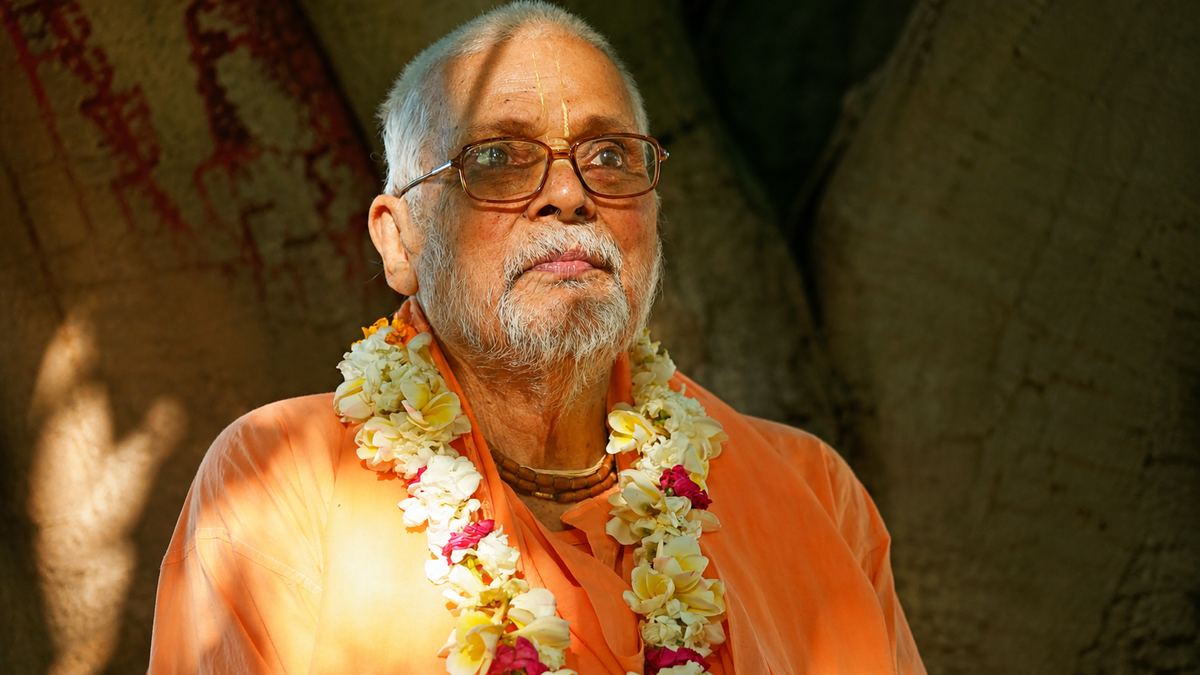
On the auspicious occasion of the centennial appearance festival of Śrī Śrīmad Bhakti Vijñāna Bhāratī Gosvāmī Mahārāja, I offer my repeated daṇḍavat praṇāmas at the lotus feet of my Śrīla Gurudeva, Śrī Śrīmad Bhaktivedānta Nārāyaṇa Gosvāmī Mahārāja, and at the lotus feet of his dear friend, Śrī Śrīmad Bhakti Vijñāna Bhāratī Gosvāmī Mahārāja.
“Āja eka viśeṣa tithi hai... Today is a special tithi.”
That is how Śrī Śrīmad Bhakti Vijñāna Bhāratī Gosvāmī Mahārāja would begin so many of his classes throughout the year. Again and again, he shared his invaluable remembrances, speaking the glories of Mahāprabhu's associates, the associates of Śrīla Bhaktisiddhānta Sarasvatī Gosvāmī Prabhupāda within our guru-varga, and so many extraordinary mahā-bhāgavata Vaiṣṇavas whose names most of us might otherwise never have known.
Today, on his centennial appearance day, I have the opportunity to offer a small expression of gratitude. In this humble offering, I will focus on one particular gift: the way he opened before us his lifelong absorption in these transcendental personalities.
How does one come to truly see a Vaiṣṇava? Śrīla Bhāratī Gosvāmī Mahārāja's remembrances and glorifications teach us that true vision is not merely a matter of physical sight, memory, or scholarship. It arises from something much deeper.
We hear:
ataḥ śrī-kṛṣṇa-nāmādi
na bhaved grāhyam indriyaiḥ
sevonmukhe hi jihvādau
svayam eva sphuraty adaḥ
(Bhakti-rasāmṛta-sindhu 1.2.234)
Because my senses are not inclined toward service, I may think I have chanted harināma, but in reality, the holy name has never actually come within their grasp. The sound coming out of my mouth is not truly "Kṛṣṇa." That is why chanting often feels like something I have to get done, rather than something I cannot stop my tongue from doing. If I were truly chanting, I would directly experience Kṛṣṇa, who is non-different from His name. But because I have yet to become sevonmukha (inclined toward service), that experience remains hidden from me.
The same principle applies when trying to see the Vaiṣṇavas. Because I am not inclined toward service, I have never truly perceived through my eyes or ears those who fully belong to Kṛṣṇa.
What does it mean to truly see a Vaiṣṇava?
My Paramgurudeva, Śrī Śrīmad Bhakti Prajñāna Keśava Gosvāmī Mahārāja, in his article "One Must Correctly Identify A Vaiṣṇava," helps us examine what it really means to have darśana of a Vaiṣṇava. He notes that we often mistakenly assess someone's eligibility based on mundane virtues "which attract us and arouse in us a semblance of affection."
But he explains that these are not a Vaiṣṇava's defining characteristics:
"A Vaiṣṇava should be identified and honoured on the basis of his vaiṣṇavatā... This quality is the Vaiṣṇava's exclusive dedication to the service of Śrī Viṣṇu, and it is this that comprises his real nature."
He then makes an essential point:
"From our mundane perspective, we may also detect the qualities of a Vaiṣṇava that are listed by Śrīla Kavirāja Gosvāmī in persons who are not Vaiṣṇavas, such as the followers of varṇāśrama-dharma. In truth, however, it is impossible for a non-Vaiṣṇava to possess the qualities of a Vaiṣṇava."
Using generosity as an example, he clarifies:
"An ordinary person can be 'magnanimous' according to the conventional meaning (ajña-rūḍhī-vṛtti) of the word. But this adjective cannot be applied to anyone except a Vaiṣṇava when it is given its truest and most profound sense (vidvat-rūḍhī-vṛtti)."
When I see generosity or humility in a pure devotee, I naturally understand it according to my own material experience. But my measuring stick is material, so how can I possibly measure something that belongs to the transcendental world? Aprākṛta vastu nahe prākṛta-gocara (Cc. Madhya 9.194). That which lies beyond the material senses can never be perceived through the medium of those same senses.
How does real darśana arise?
Paramgurudeva answers that question:
"Only he who has himself developed a service attitude will appreciate the importance of honouring this defining characteristic of a Vaiṣṇava."
He then gives us a practical test:
"If the qualities I detect in a Vaiṣṇava, like affection and patience, do not inspire me to engage in the service of Śrī Viṣṇu and the Vaiṣṇavas, and do not lead me to become attracted to his vaiṣṇavatā, then it should be understood that I have been unable to see their true aspect."
The test is not merely whether I admire a Vaiṣṇava or become emotionally moved. The test is whether hearing about him awakens within me a genuine desire to serve.
Śrīla Bhāratī Gosvāmī Mahārāja's service to the Vaiṣṇavas
Śrīla Bhakti Vijñāna Bhāratī Gosvāmī Mahārāja beautifully embodied this principle.
Beginning in 1944, Śrīla Bhāratī Gosvāmī Mahārāja regularly sought the association of his future Gurudeva, Śrī Śrīmad Bhakti Dayita Mādhava Gosvāmī Mahārāja, along with many of the other disciples of Śrīla Bhaktisiddhānta Sarasvatī Ṭhākura Prabhupāda. After leaving home in 1955 to dedicate his life to the service of Śrī Hari, guru, and Vaiṣṇavas, he remained absorbed in that service for the rest of his life.
What did such service look like in his life?
Paramgurudeva writes:
"To grasp gurudeva's heart, one will have to identify his deepest, independent inner desires and render all sorts of services accordingly."
(from the article "A True Experience of Separation" in Kṛti-ratna)
He explains that such service is possible because "indications how to truly serve manifest in the sevaka's heart from the realm of Vaikuṇṭha."
Śrīla Bhāratī Gosvāmī Mahārāja dedicated his life to serving in this spirit. Through decades of such dedicated service, he developed profound relationships not only with his Gurudeva, but also with his Gurudeva's godbrothers, the disciples of Śrīla Bhaktisiddhānta Sarasvatī Ṭhākura Prabhupāda, whom he honored as non-different from his Gurudeva. Throughout the Remembrance in Separation series, the following statement of his is quoted repeatedly:
"Although I received my dīkṣā mantras from my Guru-pādapadma, I received various mantras from the many disciples of Śrīla Prabhupāda. In other words, I received mantras in the form of the many teachings from them."
He did not merely recount the lives of these Vaiṣṇavas. Through a lifetime of service, he came to know them in a deeply personal way and shared that vision through his hari-kathā, inviting us to begin developing our own relationship with them.
If I had been born a hundred years ago, what would I actually have gained from meeting these personalities? Because I am not sevonmukha, I might have seen them with my eyes, yet still failed to truly perceive them. By the mercy of Śrīla Bhāratī Gosvāmī Mahārāja, however, I have been given the opportunity to hear about them from one who truly did.
As my Śrīla Gurudeva, Śrī Śrīmad Bhaktivedānta Nārāyaṇa Gosvāmī Mahārāja, said:
"My Gurujī proceeded to explain that no one can understand Prabhupāda by seeing him with one’s eyes. It is not with the eyes that one can understand one’s gurudeva. How can a person see him? One can see by the medium of the ears through those who have truly seen their guru in the real sense."
Therefore, on this day we sing:
guru-mukha-padma-vākya, cittete kariyā aikya,
āra nā kariho mane āśā
"Make the words emanating from the lotus mouth of śrī guru one with your heart and do not aspire for anything else."
and:
cakṣu-dāna dilā ĵei, janme janme prabhu sei,
divya-jñāna hṛde prakāśita
"He who gives the gift of transcendental vision is my master birth after birth. He manifests divine knowledge within one's heart."
Through his hari-kathā, Śrīla Bhāratī Gosvāmī Mahārāja shares with us his own vision of these Vaiṣṇavas. As those words gradually enter our hearts, we begin to know these Vaiṣṇavas through hearing, while gradually learning to follow the same path of service by which he came to know them.
Relationship through hearing
Everything in our Gauḍīya philosophy begins with sambandha, relationship. Ultimately, we seek to realize our eternal relationship with Śrī Kṛṣṇa, but that connection begins now through His devotees.
Śrī Rukmiṇī-devī's attachment to Kṛṣṇa was awakened simply by hearing about Him. In the same way, our relationships on this path begin with hearing.
Because Śrīla Bhāratī Mahārāja spent so much of his life serving these exalted Vaiṣṇavas, his mind was naturally absorbed in remembering them. Every situation called to mind another pastime, instruction, or example. By sharing those remembrances, he gave us the opportunity to begin cultivating that same absorption.
As we continue to hear Śrīla Bhāratī Gosvāmī Mahārāja glorify these great Vaiṣṇavas, our relationship with them gradually deepens. We begin looking to their lives for guidance. When we encounter different situations, their examples increasingly come to mind, offering clarity, encouragement, and inspiration. Little by little, we begin seeing the world through their eyes rather than through our conditioned minds.
When their lives become our guide
For example, when we find ourselves becoming distracted by the external beauty of a kīrtana, we can remember Śrīla Bhakti Rakṣaka Śrīdhara Gosvāmī Mahārāja's instruction:
"You should never lay emphasis on the rhythm, musical meter, melody and other nuances of kīrtana. Instead, always focus on its deep meaning and try to follow the inner mood of the Vaiṣṇava who composed it."
Our attention returns to the heart of the kīrtana.
When we find ourselves disturbed about losing money, we remember Śrīla Bhakti Pramoda Purī Gosvāmī Mahārāja. Standing before Lord Jagannātha's chariot, completely absorbed in singing, "sei ta parāṇa-nātha pāinu...", a pickpocket reached into his shoulder bag. When someone caught the thief’s hand and began loudly proclaiming, “I have caught the pickpocket! I have caught the pickpocket!” Śrīla Purī Gosvāmī Mahārāja chastised him, “Money will come and go. Whoever wants it, may take it. But can this mood that has now awakened be attained at all times?”
Immediately, we remember what is actually valuable.
When someone who has offended a Vaiṣṇava offers a large donation, we remember the wealthy donor who approached Śrīla Bhakti Pramoda Purī Gosvāmī Mahārāja after committing such an offence. He refused it completely, saying, "If I accept anything offered by you, then I will have to share the result of the offence you have committed."
Immediately, we remember that no amount of money can ever take precedence over honoring the Vaiṣṇavas.
Yet when someone has spoken or acted harshly toward us and later finds himself in need of help, we remember another incident that Śrīla Bhāratī Mahārāja recounts in Volcanic Energy. When one of his Gurudeva's godbrothers repeatedly criticized his Guru Mahārāja, Śrīla Bhāratī Mahārāja naturally lost his enthusiasm to serve him. But his Guru Mahārāja repeatedly instructed him to continue serving that devotee with great care. Later, when that devotee offered his Māyāpura āśrama in gratitude, his Guru Mahārāja declined it, explaining that it was not out of any desire to acquire the āśrama that they had served him, but because he possessed deep, unwavering faith in Śrīla Prabhupāda.
Immediately, we remember never to measure a Vaiṣṇava by his dealings with us, but by his relationship with śrī gurudeva.
Examples like these help us appreciate the gift Śrīla Bhāratī Gosvāmī Mahārāja was giving us through his hari-kathā. He has given us far more than a collection of beautiful stories. Through these remembrances, he has given us lifelong companions for our sādhana and our daily lives. Each appearance and disappearance day becomes another opportunity to welcome one more Vaiṣṇava into our hearts. Gradually, we learn to respond to the situations that arise in our lives less according to our conditioned nature and more according to the guidance and example of these great mahāpuruṣas.
A practical sādhana
Śrīla Mahārāja repeatedly emphasized that neglecting these Vaiṣṇavas on their sacred tithis is an aparādha. The Skanda Purāṇa lists among the six vaiṣṇava-aparādhas failing to welcome a Vaiṣṇava (nābhinandati) and failing to rejoice upon seeing him (na harṣaṁ darśane).
To help us honor these days, Śrīla Bhāratī Mahārāja left us a priceless gift: the opportunity to hear the kathā of these Vaiṣṇavas whenever their appearance and disappearance days come.
We may not immediately perceive the effect these remembrances have on our hearts, but Śrīla Mahārāja once shared a beautiful analogy to illustrate how every act of bhakti gradually increases our qualification. He described how the constant dripping of a leaking tap eventually leaves an impression on a stone floor after many years. Then he asked, "Which drop contributed to the impression?" A devotee replied, "Every drop." Śrīla Mahārāja smiled and said, "Yes. Right from the first drop, the process had begun." The same principle applies to our yearly observance of these sacred days. Each time we return to the kathā of these Vaiṣṇavas, another impression is made upon our hearts, gradually deepening our relationship with them.
A centennial saṅkalpa
Service means trying to give pleasure. And what could bring greater pleasure to Śrīla Bhāratī Mahārāja than seeing us develop a deep appreciation for those personalities who were dearer to him than his own life? By honoring them, we honor his greatest treasure. We ensure that books like My Beloved Masters do not simply remain on our shelves, but become living guides for our daily lives.
Śrīla Bhāratī Mahārāja said that even if, on a Vaiṣṇava's tithi, all we can do is remember their name and offer a heartfelt "Jaya!", that itself is meaningful. Yet he has also given us the opportunity to do much more.
Especially during this centennial year, we have a beautiful opportunity to make a simple saṅkalpa for his pleasure: "Whenever the appearance or disappearance day of one of these great personalities arrives, I will spend a little time hearing or reading the kathā that Śrīla Bhāratī Mahārāja has left us about them."
Today, that resolve is easier than ever to keep. By subscribing to the Viśuddha-caitanya-vāṇī mailing list, we can receive reminders of these sacred days throughout the year together with Śrīla Bhāratī Mahārāja's kathā about each Vaiṣṇava. In this way, the practice he encouraged can naturally become part of our yearly sādhana.
Likewise, throughout this centennial year, devotees from around the world will be sharing weekly remembrances of Śrīla Bhakti Vijñāna Bhāratī Gosvāmī Mahārāja. By hearing devotees' remembrances of his life, his service, and the transcendental personalities who were so dear to him, we have another opportunity to deepen our appreciation for the gift he has left us.
(Link to follow this program: https://linktr.ee/vcvani)
By taking advantage of these opportunities, we honor Śrīla Bhakti Vijñāna Bhāratī Gosvāmī Mahārāja not simply by remembering him on this centennial appearance day, but by beginning to enter the world he revealed to us: a world of remembering the Vaiṣṇavas, serving the Vaiṣṇavas, and, by their mercy, gradually learning to truly see them.
Śrī Śrīmad Bhakti Vijñāna Bhāratī Gosvāmī Mahārāja ki jaya!
Comments ()